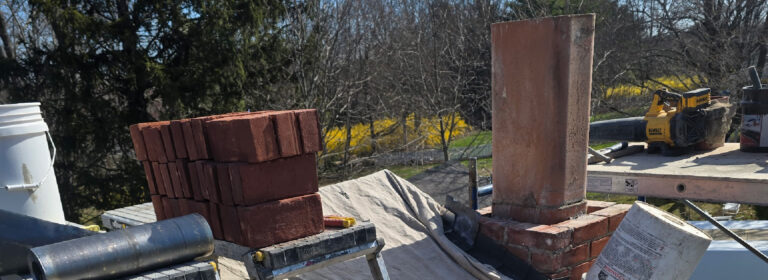
Water gets into a fireplace after rain from one of five places: a missing or damaged chimney cap, a cracked crown, failed flashing where the chimney meets the roof, porous or cracked brick and mortar, or, on factory-built fireplaces, a rusted chase cover. Finding the actual entry point comes first, because each one needs a different repair.
A damp, musty smell after a storm. A dark stain on the firebox wall. A puddle on the hearth. Chimney leaks show up most in Connecticut’s wet spring months, often after a winter of freeze-thaw has opened up new cracks.
The tricky part: water rarely shows up where it gets in. It can travel down the flue, along the masonry or across the roof framing before it appears.
What Should You Do If You See Water in Your Fireplace Every Time It Rains?
A leak that repeats every time it rains won’t fix itself, and it gets worse over time. Here’s what to do:
- Stop using the fireplace until the cause is found. Wet masonry and a wet flue can’t be relied on, and water can damage the liner and the damper.
- Protect the floor. Put a towel, tray or tarp under the opening to catch the water.
- Take photos of the water, stains and any damage. They’re useful when you call, and if you need to make an insurance claim.
- Note the pattern. Did it leak during steady rain, wind-driven rain, or as snow melted? This is one of the most useful clues for finding the source.
- Don’t seal or block anything yourself. Covering the top of the chimney or coating the bricks can trap the water inside and hide the real problem.
- Call for an inspection. A chimney professional can find the entry point and tell you what needs to be fixed.
Stay off the roof. Wet shingles are slippery, and your observations from inside and from the ground are enough to start with.
What Are the Most Common Reasons Water Gets Into a Fireplace After It Rains?
1. A Missing or Damaged Chimney Cap
The cap is the metal cover over the top of the flue. Without one, rain falls straight down the chimney.
Clue: water in the firebox or on the damper during ordinary rain, often with leaves or twigs coming down too.
Fix: a properly sized cap. A cap also keeps animals out. But a cap only stops water coming down the flue, not water getting into the masonry.
2. A Cracked Chimney Crown
The crown is the slab of cement on top of a masonry chimney, around the flue. It’s meant to shed water away from the bricks. Crowns crack over time, and many were built too flat or too thin to begin with.
Clue: leaks that get gradually worse over a few seasons, staining high inside the firebox, and damaged bricks near the top of the chimney.
Fix: small cracks can be sealed with a crown repair product. A badly cracked or crumbling crown needs rebuilding.
3. Failed Flashing
Flashing is the metal seal where the chimney passes through the roof. It’s one of the most common sources of chimney leaks.
Clue: water stains on the ceiling or wall next to the chimney rather than inside the fireplace, or leaks that are worst in wind-driven rain.
Fix: resealing or replacing the flashing. Layers of caulk smeared over old flashing usually only buy a season or two.
4. Porous or Cracked Brick and Mortar
Brick and mortar absorb water, and cracked joints let in even more. On a chimney that’s soaked through, water can seep through to the inside.
Clue: a damp, musty smell, white staining on the outside bricks, and leaks during long, heavy rain rather than short showers.
Fix: repointing the joints and replacing damaged bricks, then applying a breathable water repellent. The full explanation of this damage is covered in our freeze-thaw damage guide
5. A Rusted Chase Cover (Factory-Built Fireplaces)
If your chimney is a wood-framed box with siding instead of brick, you likely have a factory-built (prefab) fireplace. The top of that box is sealed with a metal chase cover. Cheaper covers rust through or sag and collect water.
Clue: rust streaks down the siding of the chase and water inside the fireplace.
Fix: a replacement chase cover, ideally stainless steel with a sloped design that sheds water.
How Can You Find Where the Leak Is Coming From After a Storm?
You don’t need to climb up to narrow it down. Use the clues:
| What you notice | Most likely source |
|---|---|
| Water in the firebox in ordinary rain, with leaves or twigs | Missing or damaged cap |
| Staining high in the firebox that gets worse each season | Cracked crown |
| Stain on the ceiling or wall beside the chimney | Failed flashing |
| Leaks only in wind-driven rain | Flashing or an open-sided cap |
| Leaks after long, heavy rain; white staining outside | Porous brick or cracked mortar |
| Rust streaks on the chase siding | Rusted chase cover |
Two other checks help:
- Look at the attic, if you can reach it safely. Water stains, damp insulation or wet wood around the chimney point to flashing or a hole higher up.
- Note when it happens. Water that shows up hours after the rain stops, or only after snow melts, often has traveled a long way from the entry point.
These clues narrow the list, but they don’t confirm it. A professional inspection is the only way to be sure, and it often includes a camera scan of the flue.
What Should You Look for on the Roof or Chimney if You Have Water Stains?
From the ground or a window, with binoculars or a phone camera on zoom, look for:
- A missing, bent, rusted or loose cap
- Cracks or crumbling in the crown on top of the chimney
- Gaps, lifted edges or rust on the flashing where the chimney meets the roof, and sealant that is dried out, cracked or smeared on thickly
- Crumbling mortar, spalled bricks and white staining on the chimney itself
- Missing, lifted or damaged shingles around the base
- Rust and gaps in the chase cover and siding, on a prefab chimney
Inside the home, check for stains on the ceiling or walls around the chimney, peeling paint, and a musty smell.
Don’t go onto the roof to check these yourself. Photographs from the ground are enough for a professional to start with.
Could It Be Condensation Instead?
Sometimes. Condensation inside a chimney can look like a leak, especially in flues serving furnaces or water heaters, or in chimneys that are oversized for the appliance. If the dampness doesn’t line up with rain at all, mention that during the assessment. It points to a different cause.
What Are the Best Ways to Fix a Leaky Chimney?
The best fix is the one that matches the source. Matching the repair to the problem is what stops the leak.
| Confirmed source | Repair | Won’t fix |
|---|---|---|
| Missing or damaged cap | New chimney cap | Crown, flashing or masonry leaks |
| Cracked crown | Crown repair or rebuild | Flashing leaks or porous bricks |
| Failed flashing | Flashing repair or replacement | Water soaking through masonry |
| Failing mortar or bricks | Repointing, brick replacement, water repellent | Crown or cap problems |
| Rusted chase cover | New chase cover | Other gaps in the chase siding |
Some chimneys have more than one source. A good inspection checks all five, not just the most obvious.
A common mistake is sealing the bricks when the real problem is the flashing or crown. The chimney gets a waterproofing coat, the leak continues, and the money is gone. Find the entry point first, then fix it. Timing matters too, since masonry repairs need warm, dry weather .
Frequently Asked Questions
What are the most common reasons water gets into a fireplace after it rains?
The most common reasons are a missing or damaged chimney cap, a cracked crown, failed flashing, porous or cracked brick and mortar, and, on factory-built fireplaces, a rusted chase cover.
What are the best ways to fix a leaky chimney that lets rainwater into the fireplace?
Find the entry point first, then match the repair: a new cap, crown repair, new flashing, repointing and brick replacement, or a new chase cover. Waterproofing alone only works if water is soaking through sound masonry.
What should I do if I see water in my fireplace every time it rains?
Stop using the fireplace, catch the water, take photos, note when the leak happens, and call for an inspection. Don’t seal the top of the chimney or coat the bricks yourself.
How can I find where a water leak into my fireplace is coming from after a storm?
Use the clues: water with leaves points to the cap, staining high in the firebox points to the crown, a stain beside the chimney points to flashing, and leaks only in wind-driven rain point to flashing or the cap. A professional inspection confirms the source.
What should I look for on the roof or chimney if I have water stains around my fireplace?
From the ground, look for a damaged cap, a cracked crown, gaps or rust in the flashing, crumbling mortar and bricks, lifted shingles and a rusted chase cover. Don’t climb onto the roof.
Why does my chimney only leak in windy rain?
Wind pushes rain sideways into gaps that stay dry in normal rain, most often failed flashing or an open-sided cap.
Should I call a roofer or a chimney company?
If the water appears inside the fireplace or on the chimney itself, start with a chimney company. If it’s a ceiling stain near the chimney, flashing is the likely cause, and many chimney companies handle flashing too.
Will waterproofing stop my chimney leak?
Only if the water is soaking through the brick and mortar, and only after any damaged masonry is repaired. It won’t stop a crown, cap or flashing leak.
Find and Fix Your Chimney Leak
Eversafe Chimney Experts diagnoses and repairs chimney leaks for homeowners across Connecticut, including Bridgeport, New Haven, Stamford. Our technicians are CSIA certified, licensed and insured, and we’ve served homeowners for 10 years. Our chimney inspection is $69 and covers up to a Level 2 inspection, and same-day service is available.
Call (860) 846-4458 to book a leak inspection.