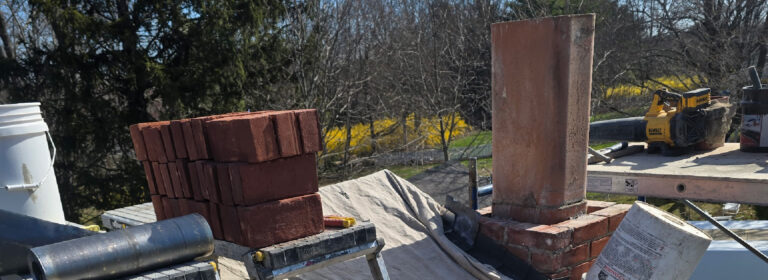
Water soaks into chimney brick and mortar, freezes overnight, and expands by about 9%. When it thaws, more water gets in, and the next freeze pushes the cracks further. After enough of these cycles, brick faces flake off (spalling) and mortar crumbles out of the joints. The fix is to repair the damaged masonry and stop water from getting in.
A chimney is the most exposed part of a house: rain, snow and wind on all four sides, with no roof over it. Connecticut winters regularly swing above and below freezing, sometimes in the same day, and that back-and-forth is what wears masonry down.
What Are the Main Ways Connecticut Winters Damage Chimney Brick and Mortar?
Most winter masonry damage comes down to one thing, which is water that gets in and freezes. It happens in a few ways:
- Freeze-thaw cycles. Water inside the brick and mortar freezes, expands and breaks the material from within. This is the main cause.
- Water entering through cracks. A cracked crown, failed flashing or open mortar joints let in far more water than the masonry would absorb on its own.
- Repeated melting snow. Snow that melts during the day and refreezes at night keeps the masonry wet through the whole season.
- Wind-driven rain and snow. These push moisture into the sides of the chimney and into any small gaps.
- Trapped moisture. The wrong kind of coating, such as paint or a non-breathable sealant, can hold water inside the brick and make damage worse.
How Do Freeze-Thaw Cycles Affect Chimney Bricks and Mortar Joints?
Brick and mortar are porous. They absorb water from rain and melting snow.
When that water freezes, it expands by roughly 9%, pressing outward inside the material. One freeze does very little. Dozens of freezes every winter, year after year, gradually open small cracks, let more water in, and break the surface apart.
- In the mortar joints, the result is crumbling, sandy or recessed mortar, and joints that open up.
- In the bricks, the face flakes, pops off or crumbles. This is called spalling.
That’s why water is the real problem. Masonry that stays dry doesn’t suffer from freezing. The repairs that last are the ones that fix the damage and stop water getting in.
How Can You Tell If Your Chimney Mortar Has Been Damaged by Winter?
You can check most of these from the ground. Binoculars or a phone camera with zoom help. Don’t climb onto the roof.
- Mortar problems: joints that look hollow, sandy or sunk back from the brick face, and gaps or cracks along the joint lines.
- Spalling: the face of the brick flaking, popping off or crumbling.
- Cracks: in the brick, the joints, or the cement crown on top.
- Debris: brick chips or mortar on the roof, in the gutters or around the base.
- White staining (efflorescence): salt deposits left when water moves through masonry.
- Damp patches on the ceiling or wall near the chimney inside.
- Leaning: any visible tilt is urgent and needs to be looked at right away.
If bricks are falling or the chimney is leaning, stop using the fireplace until it has been inspected.
Brick, Mortar, or Both?
Mortar is designed to be softer than brick, so it’s meant to wear first. When only the joints are failing and the brick is solid, the repair is usually repointing: grinding out the old mortar and packing in new.
When the brick itself is spalling, new mortar alone won’t help. The damaged bricks need replacing.
Often the root cause is above the bricks: a cracked crown (the cement cap on top) or failed flashing (the metal seal where the chimney meets the roof). If those are letting water in, they need fixing at the same time. The bricks just above the roofline are usually the first to fail, because they’re the most exposed. Learn more about chimney leaks and how to identify them.
What Are the Best Repair Options for Chimney Bricks Cracked by Winter?
The right repair depends on how far the damage goes. Sealing over a crack doesn’t fix a cracked brick. It needs to be repaired or replaced.
| Repair | Fits when | Doesn’t fix |
|---|---|---|
| Repointing | Mortar joints are failing but bricks are sound | Spalled or broken bricks |
| Brick replacement | A limited number of bricks are damaged | Widespread deterioration or instability |
| Crown repair or rebuild | The crown is cracked or crumbling | Damage lower on the chimney |
| Partial rebuild | The top section above the roofline is badly damaged | Problems below the section rebuilt |
| Full rebuild | Damage is widespread or the chimney is leaning | Nothing, but it’s the biggest job |
For cracked bricks specifically:
- A few cracked or spalled bricks can usually be cut out and replaced individually, with the surrounding mortar repointed.
- Many damaged bricks near the top usually mean a partial rebuild of the section above the roofline.
- Cracks that keep growing, or a leaning chimney, point to structural movement, and need an assessment before any repair is chosen.
A good estimate tells you which of these you need and why, with photos.
Why the Right Mortar Matters
Harder isn’t better. Many older Connecticut homes have softer, lime-based mortar. Repointing them with a hard, modern Portland cement mix can backfire: the new mortar is stronger than the old brick, so the stress goes into the brick instead, and the brick faces start breaking off.
The repair mortar should match the strength of the existing masonry. Ask what mix will be used.
Can Chimney Masonry Be Repaired in Winter?
Small repairs can sometimes be done in mild spells, but mortar needs time above freezing to cure. Most masonry guidance calls for temperatures of 40°F or above during the work and while it cures, so major repointing and rebuilding usually wait for spring or summer repair.
What shouldn’t wait is an assessment. If bricks are falling or the chimney is leaning, have it checked now. Temporary measures can make it safe until permanent work is possible.
What Are the Best Ways to Protect a Chimney From Connecticut Winter Weather?
The best protection is to fix the small problems before winter, and keep water out all year.
- Get an inspection every year, ideally in late summer or fall, so damage is caught before the first freeze.
- Repair cracked or missing mortar and damaged bricks before winter, not after.
- Keep the crown, flashing and cap in good condition. They keep water out at the top, where the chimney is most exposed.
- Apply a breathable water repellent after repairs are done. It reduces how much water the masonry soaks up. It is not a repair, and it can’t fill missing mortar or fix a cracked crown. Paint or a non-breathable sealant can trap moisture inside and make spalling worse. Read our guide on repairing chimney damage before waterproofing
- Keep gutters clear and trim branches that drip onto the chimney.
- Never chip ice off the chimney or use harsh de-icing chemicals on it.
Frequently Asked Questions
What are the main ways Connecticut winters can damage chimney brick and mortar?
Mostly through freeze-thaw cycles, where water absorbed by the masonry freezes and expands. Cracks in the crown, failed flashing and open mortar joints let in more water, and wind-driven moisture and the wrong coatings can make it worse.
How do freeze-thaw cycles in Connecticut affect chimney bricks and mortar joints?
Water soaks into the masonry and freezes, expanding by about 9%. Over many cycles this opens cracks, crumbles the mortar joints and causes the face of the brick to flake off (spalling).
What are the best methods to protect a chimney from Connecticut winter weather?
Have the chimney inspected every year, repair damaged mortar and bricks before winter, keep the crown, flashing and cap in good condition, and apply a breathable water repellent after repairs.
How can I tell if my chimney mortar has been damaged by Connecticut winters?
Look from the ground for joints that are hollow, sandy or sunk back, along with cracks, spalled bricks, debris around the base, white staining and damp patches near the chimney inside. A professional inspection confirms the extent.
What are the best repair options for chimney bricks cracked by Connecticut winter conditions?
A few damaged bricks can be replaced individually and the joints repointed. Widespread damage at the top may need a partial rebuild, and a leaning chimney needs a structural assessment first.
Does spalling mean the whole chimney needs rebuilding?
No. A few spalled bricks can often be replaced individually. A rebuild is only needed when damage is widespread or the structure is unstable.
Will repointing stop my chimney leak?
Only if the mortar joints are where the water is getting in. If the crown or flashing is leaking, repointing won’t solve it.
Is it safe to keep using my fireplace?
Exterior brick damage doesn’t always affect the inside of the chimney, but it can. Water that gets into the masonry can also damage the liner. If you’re seeing damage, have the chimney inspected before relying on it.
Get Your Chimney Masonry Assessed
Eversafe Chimney Experts repairs chimney brick, mortar and crowns for homeowners across Connecticut, Our technicians are CSIA certified, licensed and insured, and we’ve served homeowners for 10 years. Our chimney inspection is $69 and covers up to a Level 2 inspection, and same-day service is available.
Call (860) 846-4458 to book an assessment.